Saturday, 12 October 2013

shapes of house

Here and there among the greenery were palace-like buildings, but the house and the cottage, which form such characteristic features of our own English landscape, had disappeared.

The clear spring morning, the scent of the moist earth, the fresh leaves just showing their creased-up wealth of greenery from out their half-opened sheaths, seemed part of the cheerfulness she was feeling from a long conversation
beauti·ful·ness n.
Synonyms: beautiful, lovely, pretty, handsome, comely, fair1
All these adjectives apply to what excites aesthetic admiration. Beautiful is most comprehensive: a beautiful child; a beautiful painting; a beautiful mathematical proof.
Lovely applies to what inspires emotion rather than intellectual appreciation: "They were lovely, your eyes" (George Seferis).
What is pretty is beautiful in a delicate or graceful way: a pretty face; a pretty song; a pretty room.
Handsome stresses poise and dignity of form and proportion: a very large, handsome paneled library. "She is very pretty, but not so extraordinarilyhandsome" (William Makepeace Thackeray).
Comely suggests wholesome physical attractiveness: "Mrs. Hurd is a large woman with a big, comely, simple face" (Ernest Hemingway).
Fair emphasizes freshness or purity: "In the highlands, in the country places,/Where the old plain men have rosy faces,/And the young fair maidens/Quiet eyes" (Robert Louis Stevenson).

1. a substance composed of solid coloring matter suspended in a liquid medium and applied as a protective or decorative coating to various surfaces, or to canvas or other materials in producing a work of art.
2. an application of this.
3. the dried surface pigment: Don't scuff the paint.
4. the solid coloring matter alone; pigment.
5. cosmetics, esp. lipstick or rouge, designed to heighten natural color.
6. Chiefly Western U.S. a pied, calico, or spotted horse or pony; pinto.
v.t.
7. to coat, cover, or decorate with paint.
8. to produce (a picture, design, etc.) in paint.
9. to represent in paint: to paint a sunset.
10. to describe vividly in words: The ads painted the resort as a paradise.
11. to color by or as if by painting.
12. to coat or brush, as with a liquid medicine or a cosmetic.
v.i.
13. to coat or cover anything with paint.
14. to engage in painting as an art.
15. to use cosmetics.
sweming pool
big house
stony house
Taaj mahal
sea house
Lighting house
wide house

cover house
A charming restoration
Lightened up the Palette-"The red brick was hard and lifeless before," says Jeremy. A limewash (paint diluted with water and mixed with sand) softened up the harsh brick. They continued to fine-tune the facade by painting all the shutters and trim Pratt & Lambert's Lambswool. This new creamy color scheme makes the home's original (and much envied) Buckingham gray slate roof stand out.
my house
There is something about beauty in my home that makes me relax. I don't need the best or latest - I just need to be able to take a cast-off and make it into my own little joy. I'm a nester....
ZsaZsa Bellagio: House Aqua Bluetiful


American colonial with Chippendale railing over front door, gas lantern and American flag - Brookwood Hills in Atlanta, renovated by Stan Dixon (photograph also by Stan Dixon)

Southern porch with aqua color shutters, french doors & lanterns.
Churchill cottage, Birmingham, Michigan. Sears Architects.
Edmund Hollander Landscape Architect, Country Shingle, Love this entry, beautiful gates

The River Dunes community in Oriental, North Carolina

Spring Island, South Carolina, just feels so right

Stucco house painted pale pink, Cote De Texas
french essence and the snow...vicki archer

Gardensheds | Storage Sheds and Garden Houses, Architecturally designed
white washed brick, lantern, topiary, bench.
hefoodogatemyhomework: Buff colored stucco Georgian revival with lots of French details c1920, Winnetka, Illinois. Love the pedimented dormers, plaster swag detailing, and balustrade with urns.
Shingle Style Home with Porches | feeling very nantucket, Content in a Cottage
Before this house had red brick and was hard and lifeless. A limewash softened up the harsh look. It's curb appeal went up 100% Ranch homes look so much better usually if painted too.

The Pink Pagoda, Climbing Roses around entry door creates such charm!
Design Chic: Things We Love: Conservatories

gray painted brick, painted brick can make the biggest difference in a small home and this wonderful fencing brings it together





Healthy fruits


Pomelo Fruit
Vitamins
Amounts Per Selected Serving
%DV
Vitamin A
15.2
IU
0%
Vitamin C
116
mg
193%
Vitamin D
~
 
~
Vitamin E (Alpha Tocopherol)
~
 
~
Vitamin K
~
 
~
Thiamin
0.1
mg
4%
Riboflavin
0.1
mg
3%
Niacin
0.4
mg
2%
Vitamin B6
0.1
mg
3%
Folate
~
 
~
Vitamin B12
0.0
mcg
0%
Pantothenic Acid
~
 
~
Choline
~
 
 
Betaine
~
 
 
BLack plum jamun


ccording to Jamo marketing director Steen Michaelsen, the A 200 Series satellite speaker is the answer for fusing high-quality picture with audiophile sound. "The rapid acceptance of flat panel televisions has quickly revealed a major drawback. With its slim frame, there is simply no room for quality loudspeakers,? he said. "To resolve this issue, we have designed an attractive partner for any flatscreen display, with sound quality to match even the finest picture quality."
                                            

Since 1968, Jamo has been at the forefront of the acclaimed Danish audio industry, consistently focusing on style, simplicity and functionality when designing its speakers, electronics, control systems and accessories for residential and commercial applications. Operating in more than 80 countries, Jamo also takes pride in how its products seamlessly adapt and integrate into various environments, reflecting the different ways the world listens. Jamo is owned by Indianapolis, Indiana-based Klipsch Group, Inc., a wholly-owned subsidiary of Audiovox Corporation (NAS)

Banana

You thought you knew bananas? Try again. There's 20 different types that grow in Thailand - ranging from small stubby ones to large fleshy types - each of which have different names. In Thailand you'll find them eaten any which way: pure, dried, boiled, fried, served in sweet coconut milk or, simply, enjoyed fresh.

Custard Apple

Light green and about the size of a tennis ball, the flesh of this knobby textured fruit is, much likecustard, best eaten with a spoon. The sweet tasting meat contains tiny black seeds.

Durian


Surely the most controversial fruit on earth, durian is to its fans a rich, unique tasting fruit, and to its critics, a putrid-smelling, lame duck of a fruit. Its extremely strong aroma - which some say resembles rotting fruit down a blocked drain - let alone its aggressive look, is enough to put many off tasting it altogether. Others, swear by it. Its the most expensive of all Thai fruits and actually banned, yes banned, from some public places, hotels and on planes.

Strawberry

An immigrant to Thailand, the strawberry nonetheless grows well in Thailand's northern rolling hills. In the cool months between December and March, you'll find this luscious red fruit making an appearance at markets. They grow here to a medium size and are juicy and very rich in flavour.

Watermelon

Thailand's rich soil imparts watermelons here with a delicious flavour. Found in a rich ruby-red and more unusually a golden yellow colour, they are often used as the centrepiece for fruit carving due to the intricate designs that can easily be made using the fruit's thick, green rind. You'll find that its thrown liberally into blenders to make delicious, refreshing drinks.

Pineapple


The Kingdom is one of the largest producers of this flavourful, juicy fruit. Growing year round it is best planted in sandy seacoast soil, and grows on a low lying plant. It's an incredibly versatile fruit that finds its way into desserts, drinks and savoury dishes.

Lychee

Covered by a red, roughly-textured rind that is inedible but easily removed, the inside of a lychee consists of a layer of sweet, translucent white flesh and has a texture somewhat similar to that of a grape. The centre contains a single glossy brown nut-like seed, that should not be eaten. This gorgeous fruit matures from July to October, about 100 days after flowering.

Mango


One of the most well-known fruits in Thailand, there are many varieties of the delicious, refreshing mango and a few different ways of eating it. When ripe, it can be halved and eaten with a spoon, while many choose to enjoy it with sticky rice and coconut milk (Khao Niew Ma-muang). Others like to eat it half-ripe and dip the crunchy slices in sugar. Also makes a wonderful juice. 

Guava

Originally from Central America and the West Indies, Guava is now grown in many tropical countries and favoured especially for its fragrant, exotic taste. Available all year round, it makes a popular snack that can be eaten green and crunchy alongside salt, sugar and chilli, or when ripe. Tasty and highly refreshing, guava can also be made into delicious drinks, luscious ice creams or rich jams and jellies. It's Thai name, Farang, is also the term that foreigners are known by.

Longan


A lesser known sibling of the lychee and rambutan, the longan has a sweet, delicate flavour and grows in Northern Thailand in the Chang Mai area, especially between June and August. The skin is pierced by the finger and the delicious, juicy flesh revealed by squeezing it out of its shell using the thumb and forefinger.

Durian 

Surely the most controversial fruit on earth, durian is to its fans a rich, unique tasting fruit, and to its critics, a putrid-smelling, lame duck of a fruit. Its extremely strong aroma - which some say resembles rotting fruit down a blocked drain - let alone its aggressive look, is enough to put many off tasting it altogether. Others, swear by it. Its the most expensive of all Thai fruits and actually banned, yes banned, from some public places, hotels and on planes.

Rambutan

Its name is derived from the malay word for rambut, meaning hair - a result of the fruits red and yellow spiky rind. Peeling this away reveals a firm, white, translucent flesh, something the Thais are especially adept at delicately carving away from its large seed.

Langsat

Native to Thailand, the langsat is a small round seasonal fruit available between July and October. Use your fingers to prise open the thin, off white skin and you'll find a translucent, juicy flesh with a slightly tart flavour. An excellent thirst quencher, its flesh falls away into five segments and is best eaten raw.

Papaya

A delicious year-round fruit that is at its best between March and June, the papaya is oval in shape and cut lengthways to remove the small black seeds in the middle. When ripe the soft dark orange coloured meat is full of flavour. Thais like to shred unripe papaya and mix it with lemon juice, chillies, peanuts and dried shrimp (Som Tam) - one of Thailand's favourite salads. 

Mangosteen

Little known outside Thailand, the Mangosteen is a bizarre looking fruit that contains in its round, deep purple shell a delicate, flavorful white flesh that is eaten in sections. The number of sections found inside match the number of petals found on the bottom of the shell. A delicious, distinctive flavour also makes it wonderful for  juices.

Sapodilla

Rather deceptively, the dull and unattractive skin of this fig-like fruit masks the soft, succulent honey flavoured flesh to be found within. A knife is used to carve away the skin, and in Thailand you'll often find it carved into decorative shapes. A definite favourite.


Different animals with detail.


buffalofound on the Indian subcontinent to Vietnam and Peninsular Malaysia, in Sri Lanka and inBorneo. Water buffaloes are especially suitable for tilling rice fields, and their milk is richer infat and protein than that of the dairy cow. The large feral population of northern Australiabecame established in the late 19th century, and there are smaller feral herds in New GuineaTunisia and northeastern Argentina. Two groups have been described, termedSwamp and River types.[1] There are at least 130 million domestic water buffalo, and more human beings depend on them than on any other domestic animal.


Two hippo species are found in Africa. The large hippo, found in East Africa, occurs south of the Sahara. The other, much smaller (440 to 605 pounds) species of hippo is the pygmy hippopotamus. Limited to very restricted ranges in West Africa, it is a shy, solitary forest dweller and is now rare

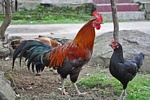
Rooster

The rooster is often portrayed as crowing at the break of dawn ("cock-a-doodle-doo") and will almost always start crowing before 4 months of age. Although it is possible for a hen to crow as well, crowing (together with hackles development) is one of the clearest signs of being a rooster.[4] He can often be seen sitting on fence posts or other objects, where he crows to proclaim his territory. However, this idea is more romantic than real, as a rooster can and will crow at any time of the day. Some roosters are especially vociferous, crowing almost constantly, while others only crow a few times a day. These differences are dependent both upon the rooster's breed and individual personality. He has several other calls as well, and can cluck, similar to the hen. Roosters will occasionally make a patterned series of clucks to attract hens to a source of food, the same way a mother hen does for her chicks.
.The rooster is often portrayed as crowing at the break of dawn ("cock-a-doodle-doo") and will almost always start crowing before 4 months of age. Although it is possible for a hen to crow as well, crowing (together with hackles development) is one of the clearest signs of being a rooster.[4] He can often be seen sitting on fence posts or other objects, where he crows to proclaim his territory. However, this idea is more romantic than real, as a rooster can and will crow at any time of the day. Some roosters are especially vociferous, crowing almost constantly, while others only crow a few times a day. These differences are dependent both upon the rooster's breed and individual personality. He has several other calls as well, and can cluck, similar to the hen. Roosters will occasionally make a patterned series of clucks to attract hens to a source of food, the same way a mother hen does for her chicks.


"Cock" is in general use as the name for a male of other species of bird, for example "Cock sparrow". "Roosting" is the action of perching aloft to sleep at night, and is done by bothsexes. The rooster is polygamous, but cannot guard several nests of eggs at once. He guards the general area where his hens are nesting, and will attack other roosters that enter his territory. During the daytime, he usually sits on a high perch, usually 3–5 feet off the ground to serve as a lookout for his flock. He will sound a distinctive alarm call if predators are nearby.

Camels live in deserts, where it is hot and dry. Camels have adaptations that help them live in deserts. They have a thick coat of hair that protects them from the sun. They have wide, soft feet, so they can walk a long time in the hot sand.
Several adaptations help a camel save water. When there is food and water, a camel can eat and drink large amounts and store it as fat in the hump. Then, when there is no food or water, the camel uses the fat for energy, and the hump becomes small and soft. A camel’s waste contains very little water. Even the water from the camel’s breath flows back into its mouth.
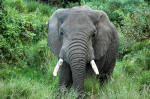
Elephants, largest of all land animals, are among the most recognizable and beloved creatures on Earth. Their ancestors once roamed most of the planet, but wild populations are now confined to decreasing swaths of land in Africa and Asia. Hunted mercilessly for their prized ivory tusks, they are under threat in most of their range from poaching, habitat loss, and human encroachment and are listed as threatened by the IUCN.
National Geographic has been promoting elephant research and conservation since 1922. You can make an impact by offering your support to the National Geographic Society. You can also contact your local government representative and your country's CITES representative to express your support of the international ban on the trade of ivory. People in the United States can get in touch with their congressional representative and the U.S. Fish and Wildlife Service.

Black bear

Asian black bears are small bears, generally weighing between 200 and 400 pounds, depending on the region and time of year. Males are larger than females. They have stocky bodies covered by a dense fur coat, which is black or dark brown in color. In addition to the white patch on its chest, this bear also has white or yellowish fur along its lower lip and chin. The head is big and round, and surrounded by a thick mane. Asian black bears have large ears and short strong claws.
The Asian black bear is widely distributed across all of southern Asia. These bears dwell predominantly in hill and mountain areas, heavily forested with deciduous trees and brush, at altitudes up to 10,000 feet. In the colder parts of their range, Asian black bears will seek out dens in which to pass the winter months, after the manner of their American cousins.
These animals are omnivores, and their diet consists of whatever is readily available in their area. In regions where there are few prey animals, they will subsist on plants. A typical diet may include some or all of the following: termites, beetles, larvae, honey, fruits, buds, nuts, small mammals, birds, fish, mollusks, and carrion.


Horse

horse hoof is a structure surrounding the distal phalanx of the 3rd digit (digit III of the basic pentadactyl limb of vertebrates, evolved into a single weight-bearing digit in equids) of each of the four limbs of Equus species, which is covered by complex soft tissue and keratinised (cornified) structures. Since a single digit must bear the full proportion of the animal's weight that is borne by that limb, the hoof is of vital importance to the horse. The phrase "no hoof, no horse" underlines how much the health and the strength of the hoof is crucial for horse soundness.


Tuesday, 8 October 2013

kinds of birds


This is a list of the bird species recorded in Pakistan. The avifauna ofPakistan includes a total of 786 species, of which 39 are rare or accidental. 1 species listed are extirpated in Pakistan and are not included in the species count. The Chukar (Alectoris chukar) is the official National bird of Pakistan, whilst theShaheen Falcon is the military state symbolic icon of the Pakistan Air Force.

avifauna 
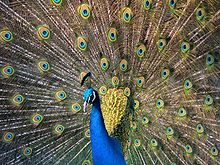
peacook

Sparrows    

dove  .


Sparrows    

Sparrows are small passerine birds. In general, sparrows tend to be small, plump, brown or grey birds with short tails and short powerful beaks. Sparrows are seed-eaters, and they also consume small insects. There are 35 species worldwide and 10 species which occur in Pakistan.

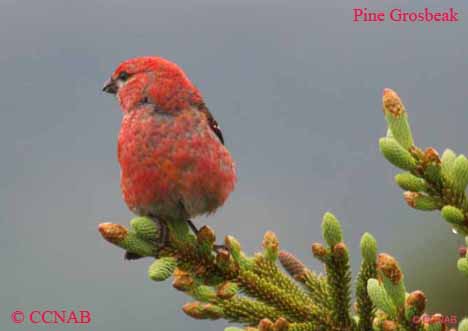
Birds names provides information for all the birds of North America, known at one time or another to have been seen and reported on the continent. Included in this list are the native birds of North America, as well as all the known vagrants that have shown up on the continent or within the boundaries of North America. Also, included are the species introduced from other areas of the world, that have adapted and are able to survive among the other species of birds. Then, there are the exotic birds, which have escaped or been released by their owners, who also have found an area where they can thrive. Lastly, there are the domesticated birds taken from the wild and raised in a controlled environment, these birds becoming larger than their wild cousins, seen in city parks, public waterways and on far